Answer Capsule: How to Get Medical Cleaning Leads
To win high-ticket medical cleaning leads and secure lucrative medical facility cleaning contracts, commercial cleaners must position themselves as compliance partners rather than just a janitorial service. Healthcare decision-makers prioritize risk mitigation. By demonstrating formal mastery of OSHA Bloodborne Pathogens (BBP) standards, HIPAA patient privacy rules, and specialized disinfection workflows, you remove the risk of cross-contamination and heavy compliance fines for the facility. This specific expertise is what transforms low-value bids into high-value, recurring healthcare janitorial leads.
1. Why Healthcare Facility Managers Reject Standard Cleaning Bids
Most commercial cleaning companies approach a medical office the same way they approach a standard corporate headquarters. They pitch a sparkling floor, wiped-down desks, and a low price point.
To a healthcare facility manager or compliance officer, that pitch is an immediate red flag.
Medical environments—ranging from local dental clinics to multi-theater surgical centers—operate under strict regulatory oversight. When evaluating medical facility cleaning contracts, decision-makers are actively scanning your pitch for two specific compliance pillars:
- Patient Privacy (HIPAA): A cleaning crew operating after hours has unprecedented access to areas containing Protected Health Information (PHI), such as patient charts on desks, un-shredded documents, or open computer terminals.
- Infection Control (OSHA): Exposure to blood, bodily fluids, and transmissible pathogens requires rigorous, documented protocols that protect both the cleaning staff and the facility’s patients.
If your proposal doesn’t explicitly outline how your team handles these risks, you won’t even make it past the initial screening.
Image Asset 1: The Healthcare Compliance Advantage
2. Positioning HIPAA Compliance as a Sales Asset
The Health Insurance Portability and Accountability Act (HIPAA) isn’t just for doctors and nurses. As a business associate, your commercial cleaning company can inadvertently trigger a massive data breach if a cleaner handles or looks at sensitive data.
To turn this into a magnet for high-value healthcare janitorial leads, build these two strategies directly into your sales process:
- The “Clean Desk” Guarantee: Inform the client that your staff is strictly trained under a “Look Down, Don’t Look At” policy. Staff are taught never to move, flip over, or read documents left on desks, counters, or at reception areas.
- Signed Business Associate Agreements (BAAs): Don’t wait for the clinic to ask for a BAA. Bring a pre-drafted BAA to your walk-through. Proactively offering to sign a BAA proves to the facility manager that you understand federal law and are ready to legally share the responsibility of protecting patient privacy.
3. Mastering OSHA Bloodborne Pathogens for Premium Bids
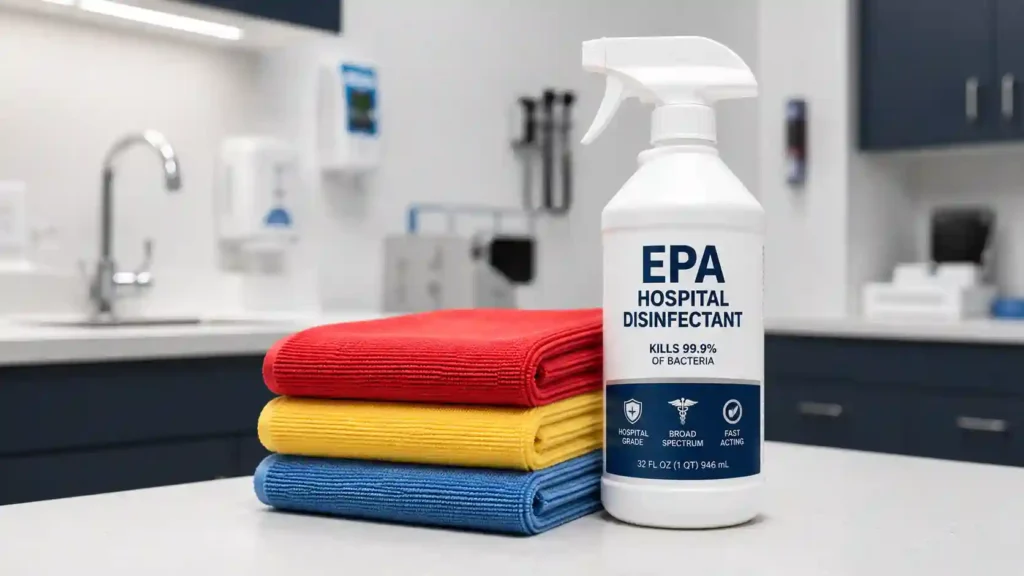
You cannot safely secure medical accounts without a formal Bloodborne Pathogens (BBP) training program. Under OSHA standard 29 CFR 1910.1030, any employee with occupational exposure to blood or other potentially infectious materials (OPIM) must receive annual training.
When submitting terminal cleaning bids or general medical office proposals, include copies of your team’s BBP training certifications. Highlight your mastery of the following technical protocols:
- The Color-Coded Microfiber System: Prove that your team eliminates cross-contamination by using separate, color-coded cloths and mops (e.g., Red for high-risk bio-contamination zones, Yellow for clinical surfaces, Blue for general office glass/dusting).
- EPA List N Disinfectants: Healthcare facilities require dwell times (the amount of time a surface must stay wet to kill pathogens) to be precisely executed. State clearly that your company exclusively uses EPA List N disinfectants with proven efficacy against MRSA, Norovirus, and Bloodborne pathogens like HIV and Hepatitis B.
Image Asset 2: Infection Control Standards
4. How to Structure Winning Terminal Cleaning Bids
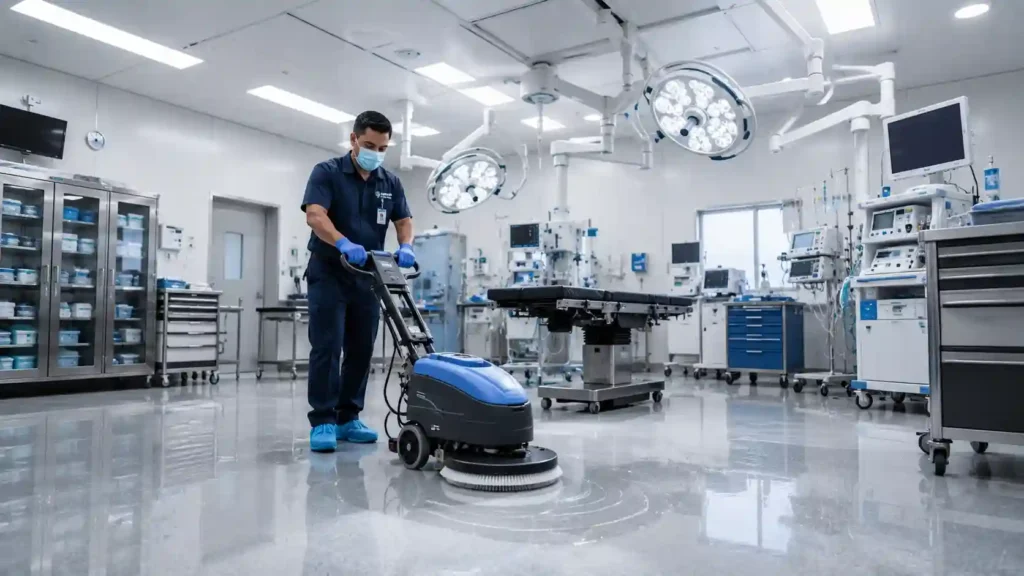
True high-ticket revenue lives in surgical centers, outpatient clinics, and urgent care facilities that require terminal cleaning bids. Terminal cleaning is a specialized, intensive disinfection process designed to completely decontaminate an operating room or clinical space between procedures or at the close of the day.
When bidding on these contracts, your scope of work should detail a strict, top-down, clockwise cleaning pattern:
Step-by-Step Terminal Decontamination Protocol
- Ceiling Fixtures & High Surfaces: Dusting and disinfecting surgical lights, vents, and track systems first, ensuring any dislodged particles fall downward.
- The Clinical Zone: Intensive disinfection of all touchpoints within the patient zone, including examination tables, IV poles, Mayo stands, and digital diagnostic equipment.
- Perimeter & Low Touchpoints: Moving outward to disinfect countertops, cabinets, sinks, and waste disposal bins.
- Bio-Hazard Waste Handling: Safe removal of regulated medical waste using proper sharps and biohazard bag handling techniques.
- Floor Flood Disinfection: Applying hospital-grade disinfectant to the entire floor surface, allowing optimal dwell time before wet-vacuuming or microfiber mopping out of the room.
Image Asset 3: Specialized Terminal Cleaning
Final Strategy: Packaging the Proposal to Close the Lead
When a healthcare provider evaluates proposals, a cheap price tag looks dangerous. They know that cheap rates often mean undertrained staff, high turnover, and skipped compliance steps—risks that could cost the facility millions in fines or malpractice lawsuits.
To lock in premium medical cleaning leads, bundle your technical compliance directly into your final proposal package:
- Attach your standard OSHA Bloodborne Pathogen training log template.
- Include a copy of your company’s Exposure Control Plan.
- Provide a written statement regarding your staff’s background checks and HIPAA privacy onboarding.
By selling compliance, safety, and risk reduction, you elevate your janitorial business above the competition and command the premium rates that high-ticket healthcare clients are more than willing to pay.
Frequently Asked Questions (FAQ)
What is a Business Associate Agreement (BAA) in medical cleaning?
A Business Associate Agreement (BAA) is a legally binding contract required by HIPAA between a healthcare provider and a third-party vendor (like a commercial cleaning company) that may encounter Protected Health Information (PHI). Proactively offering a signed BAA proves to medical facility managers that your janitorial staff is legally committed to maintaining strict patient data privacy.
How often must medical cleaning staff receive Bloodborne Pathogen training?
Under OSHA standard 29 CFR 1910.1030, any commercial cleaning employees who have occupational exposure to blood or other potentially infectious materials (OPIM) must receive formal Bloodborne Pathogen (BBP) training at least once every 12 months. Keeping interactive, updated training logs is a critical step to winning competitive medical facility cleaning contracts.
What disinfectants are required for healthcare janitorial leads?
To satisfy compliance checks for high-ticket healthcare janitorial leads, your team must exclusively use hospital-grade disinfectants listed on the EPA’s “List N.” These products are officially registered to kill resilient pathogens like MRSA, Norovirus, Influenza, and Bloodborne viruses (such as Hepatitis B and HIV) within specific dwell times.
What is included in a terminal cleaning bid for a surgical center?
A terminal cleaning bid outlines an exhaustive, top-down, clockwise decontamination process designed to completely sterilize a clinical space or operating room at the end of the day. Unlike standard janitorial services, it includes the meticulous disinfection of surgical lights, diagnostic equipment, Mayo stands, biohazard waste removal, and a full-floor flood disinfection.